Side Burner vs Portable Induction Cooktop
By E.K. Jorgensen · August 30, 2026
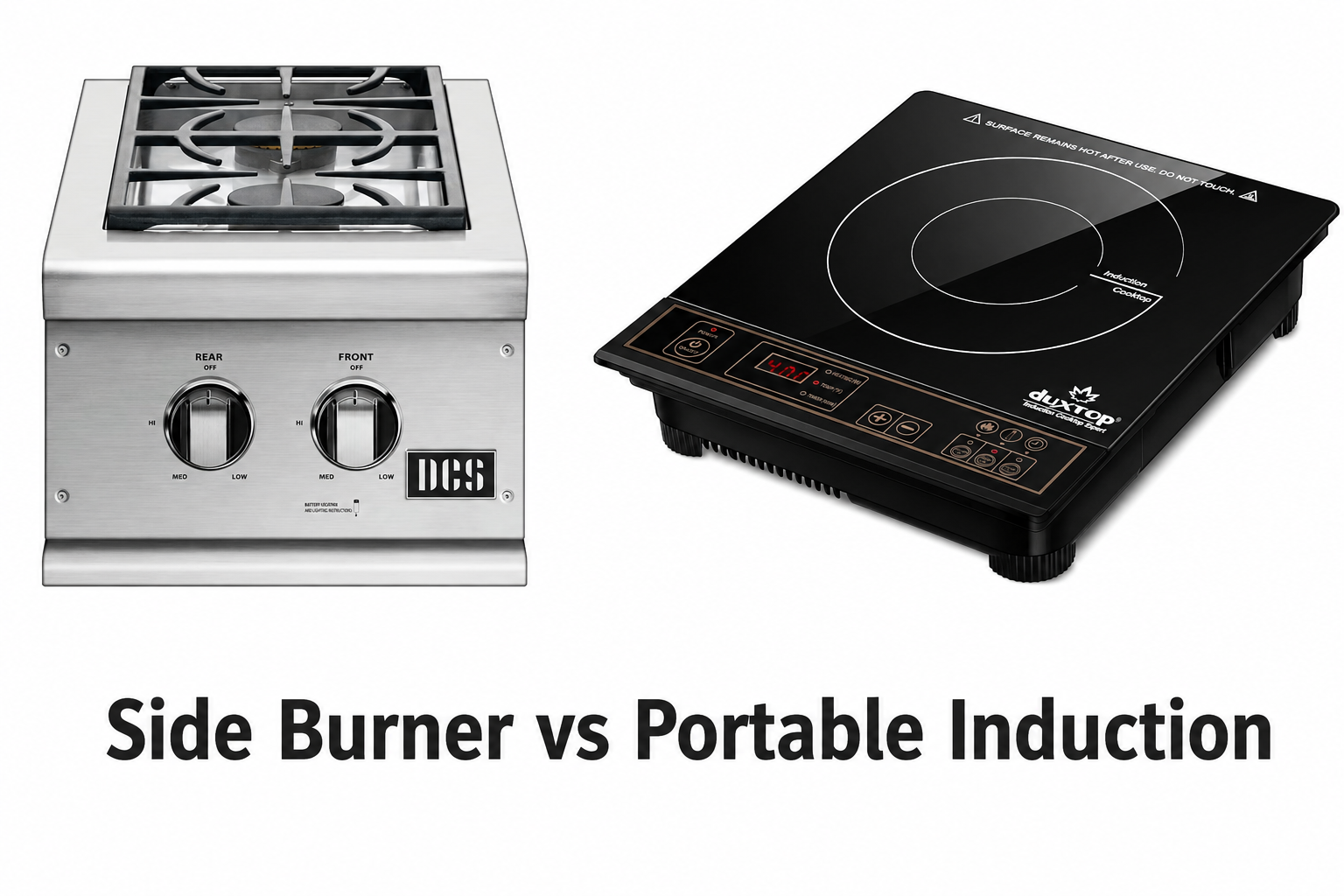
Do You Really Need a Built-In Gas Burner in Your Outdoor Kitchen?
When planning an outdoor kitchen, it’s easy to fall into the trap of thinking everything needs to be built in. Grill? Built-in. Refrigerator? Built in. Side burner? Might as well build that in, too.
But before sacrificing another 12 to 15 inches of valuable countertop space to a permanent gas burner, consider how often you’ll actually use it.
For many outdoor kitchens, a portable single-burner induction cooktop may be the better choice.
Think About How Often You'll Actually Use a Side Burner
A side or power burner certainly has its place. If you regularly boil large stockpots, fry outdoors, cook with a wok, or prepare entire meals in your outdoor kitchen, a dedicated gas burner can make sense.
But for many of us, the grill, griddle, smoker or pizza oven does most of the heavy lifting outside.
The auxiliary burner gets used for things like warming a sauce, sautéing onions, cooking a side dish, heating beans or boiling the occasional pot of water. That's useful—but does something you might use a few times a month need to permanently occupy some of the most valuable real estate in your outdoor kitchen?
That's where portable induction starts to make a lot of sense.
Use the Counter When You Need It. Reclaim It When You Don't.
Counter space is one of the easiest things to underestimate when designing an outdoor kitchen.
You need somewhere to set trays of raw food, finished food coming off the grill, cutting boards, seasonings, utensils, drinks and serving platters. Add a few guests standing around the island and that seemingly generous countertop can disappear surprisingly quickly.
A built-in burner owns its portion of the counter whether you're using it or not.
A portable induction cooktop doesn't.
Pull it out when you need an extra burner, plug it in, cook, and put it away when you're finished. The rest of the time, that same space goes back to being usable countertop.
For many outdoor kitchens, the extra counter space may ultimately be more valuable than the permanent burner.
Induction Isn't Much of a Compromise
Choosing portable doesn't necessarily mean sacrificing cooking performance.
Induction works by heating compatible cookware directly rather than heating a burner and then transferring that heat to the pan. The U.S. Department of Energy notes that induction can heat cookware faster and provide precise temperature control, while ENERGY STAR estimates that roughly 85% of the heating energy from induction is transferred to the cookware compared with roughly one-third for gas cooking.
That makes a good portable induction unit more than adequate for many of the jobs you'd normally give to an outdoor side burner:
* Simmering BBQ sauce
* Sautéing vegetables
* Heating beans or side dishes
* Boiling pasta or potatoes
* Making a pan sauce
* Heating oil for smaller frying jobs
* Keeping a pot warm while the grill is occupied
And because there's no open flame, you're not dumping nearly as much excess heat into the area around the cooktop—something you'll appreciate when you're standing over an outdoor kitchen on a hot summer afternoon.
Installation Is Simpler, Too
A built-in gas burner isn't just another appliance. Depending on your outdoor kitchen, it may require additional gas plumbing, shutoff valves, ventilation clearances and professional installation.
A portable induction cooktop eliminates the gas connection entirely.
You'll still need an appropriately installed electrical receptacle and should always follow the cooktop manufacturer's requirements regarding outdoor use and electrical supply. But if you're already designing a new outdoor kitchen, providing conveniently located electrical power gives you flexibility well beyond the induction burner.
There Are Times When Gas Still Wins
Portable induction isn't the right answer for everyone.
If you're building a serious outdoor cooking station and frequently use oversized stockpots, wok cookers, seafood boils or other high-output cooking methods, a dedicated gas power burner can be worth every inch of space it occupies.
Gas also works with essentially any conventional cookware, while induction requires magnetic cookware. An easy test: if a magnet sticks securely to the bottom of the pot or pan, it will generally work with induction.
The key is to design around how you actually cook, rather than simply checking every box on an outdoor-kitchen appliance list.
The Find a Grill Take
If you're debating whether to add a built-in side burner to your outdoor kitchen, ask yourself one simple question:
How many times did I actually use a separate burner outdoors last year?
If the answer is "occasionally," we'd seriously consider skipping the built-in burner.
Spend the money—and more importantly, the counter space—on something you'll appreciate every time you cook outside. Keep a quality portable single-burner induction cooktop in a cabinet and pull it out whenever you need it. Maybe buy two or three. They’re great for simmering sauces, preparing side dishes, or keeping food warm for buffet-style entertaining—and when dinner’s over, they go right back in the cabinet.
You'll still have a burner when you want one.
But you'll have your countertop every day.