You covered the cost of the grill. Now cover the grill!
August 30, 2026
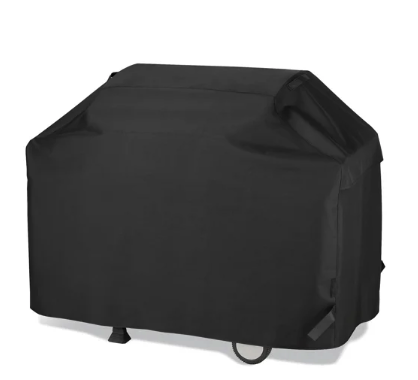
A quality grill cover is one of the simplest ways to protect your investment. Learn how the right cover can defend against rain, snow, UV exposure and corrosion, extend the life of your grill, and potentially save you money in the long run.
Why a Grill Cover Is One of the Best Investments You Can Make
You spent hundreds—or maybe thousands—of dollars on a grill. Then you rolled it onto the patio and left it outside 365 days a year.
Rain. Snow. Sleet. Dust. Pollen. Bird droppings. Tree sap. And perhaps the most relentless enemy of all: the sun.
Yet one of the least exciting accessories you can buy may also be one of the smartest: a good grill cover.
A grill is designed to live outdoors, but that doesn't mean the elements aren't slowly taking their toll. If your grill isn't protected by a covered patio or outdoor kitchen, a quality cover should be considered part of the purchase—not an optional accessory.
The Weather Always Wins Eventually
Stainless steel, powder-coated steel, painted surfaces, plastic knobs, rubber components, electronic igniters and displays all react differently to prolonged exposure outdoors.
Rain and snow introduce moisture into places you don't necessarily see. Over time, that can contribute to corrosion on fasteners, burners, brackets, grease trays and other internal components—not just the shiny exterior you wipe down.
Then there's UV exposure.
A grill sitting in direct sunlight can spend thousands of hours a year getting blasted by UV radiation. Plastic components can fade or become brittle, painted and powder-coated finishes can deteriorate, and rubber and vinyl components can age prematurely.
There's a reason quality grill-cover manufacturers specifically advertise water resistance, UV inhibitors and protection from rain, snow and sun.
A cover doesn't make your grill immortal. It simply puts another layer between your investment and everything Mother Nature is throwing at it.
The Less Expensive the Grill, the More Important the Cover May Be
There's a certain irony here.
Someone buying a $3,000 premium grill probably doesn't think twice about spending another $100 or $150 on a quality cover. Someone buying a $399 grill might look at a $60 or $80 cover and think, I'll skip it.
Arguably, that's the grill that needs one even more.
Higher-end grills generally justify at least some of their additional cost through heavier-gauge materials, higher grades of stainless steel, better coatings, more substantial burners and better overall construction.
Budget grills have to hit a price point. That can mean thinner metal, more painted or coated steel, less-expensive hardware and components that may be less forgiving of years of exposure.
Even premium manufacturer Napoleon makes essentially this point in its grill-care advice, noting that less-expensive grills may require more care to achieve a long service life.
If spending $50–$100 helps you squeeze another couple of seasons out of a $500 grill, the economics can be pretty compelling.
Don't Just Buy the Cheapest Cover
This is one place where the cheapest option isn't necessarily the best value.
A bargain cover may technically cover your grill, but that doesn't mean it will do it particularly well. Thin material can tear, inexpensive fabric can deteriorate under constant UV exposure, seams can fail, and poorly secured covers have a habit of becoming your neighbor's property during the first serious windstorm.
You also don't necessarily need the most expensive OEM cover with your grill manufacturer's logo printed across the front.
What matters is construction.
Look for a cover with durable, weather-resistant material; UV resistance; reinforced seams; straps, buckles or another way of securing it; and a reasonably close fit.
Just as importantly, look for breathability or ventilation. You want to keep rain and snow away from the grill without creating a moisture trap underneath it. Premium covers often incorporate vents specifically to promote airflow and reduce trapped moisture and mildew.
Common Sense/Safety Tip: Never cover a grill while it's still hot.
A $75 Cover Protecting a $1,500 Grill Is Cheap Insurance
It's easy to balk at paying $75, $100 or even $150 for what looks like a fitted piece of fabric.
Put the number in context.
If you've spent $1,500 on a grill and $100 on a quality cover, you've spent less than 7% of the grill's purchase price to help protect it.
Even on less expensive grills, the math makes sense. Spend $500 on a grill and another $50 on a good cover. If that combination keeps the grill looking better and helps extend its useful life, that's likely a much better deal than replacing a prematurely deteriorated grill.
For some perspective, current manufacturer covers span a fairly wide range: Weber sells covers from roughly $15–$20 for basic kettle covers to around $100 for a Genesis cover, while premium covers for larger grills can run well over $100.
You don't have to buy the most expensive cover.
You just need to buy one good enough that you won't be replacing the cover—or the grill—every couple of years.
What About a Grill Under a Covered Patio?
The calculation changes somewhat if your grill lives under a substantial patio cover.
If it's protected from direct rain and snow and receives little direct sunlight, a cover becomes less critical. But it can still protect against dust, pollen, insects, leaves, moisture, wind-driven rain and the occasional bird with questionable aim.
If your grill sits completely exposed, however, we'd consider a cover close to mandatory.
That becomes even more important in particularly harsh environments: heavy snow, frequent rain, intense sun or coastal locations where salt in the air adds another corrosive element. Napoleon specifically recommends covering grills in coastal environments, particularly during heavy rain, snow and other inclement weather.
One caveat: don't trap moisture underneath the cover. In humid climates, periodically uncover the grill and let everything breathe, and don't put a soaking-wet cover back over a damp grill. A cover should protect against moisture, not seal it in.
Protect the Grill You Already Paid For
A grill cover won't make your steaks taste better.
It won't give you a better sear, add another burner or connect your grill to Wi-Fi.
And that's probably why it's one of the easiest accessories to skip when you're standing at the checkout counter.
But after spending hundreds or thousands of dollars on the grill itself, protecting it from years of rain, snow, sun and debris is just common sense.
Buy a cover that fits properly. Make sure it's weather-resistant, UV-resistant, secure and breathable.
Let your grill cool before putting it on. And replace the cover when it finally wears out.
Your grill lives outside. Dress it accordingly.