
Buying a Grill for a Coastal Home? Why Stainless Steel Grade, Components, and Protection Matter
October 16, 2026
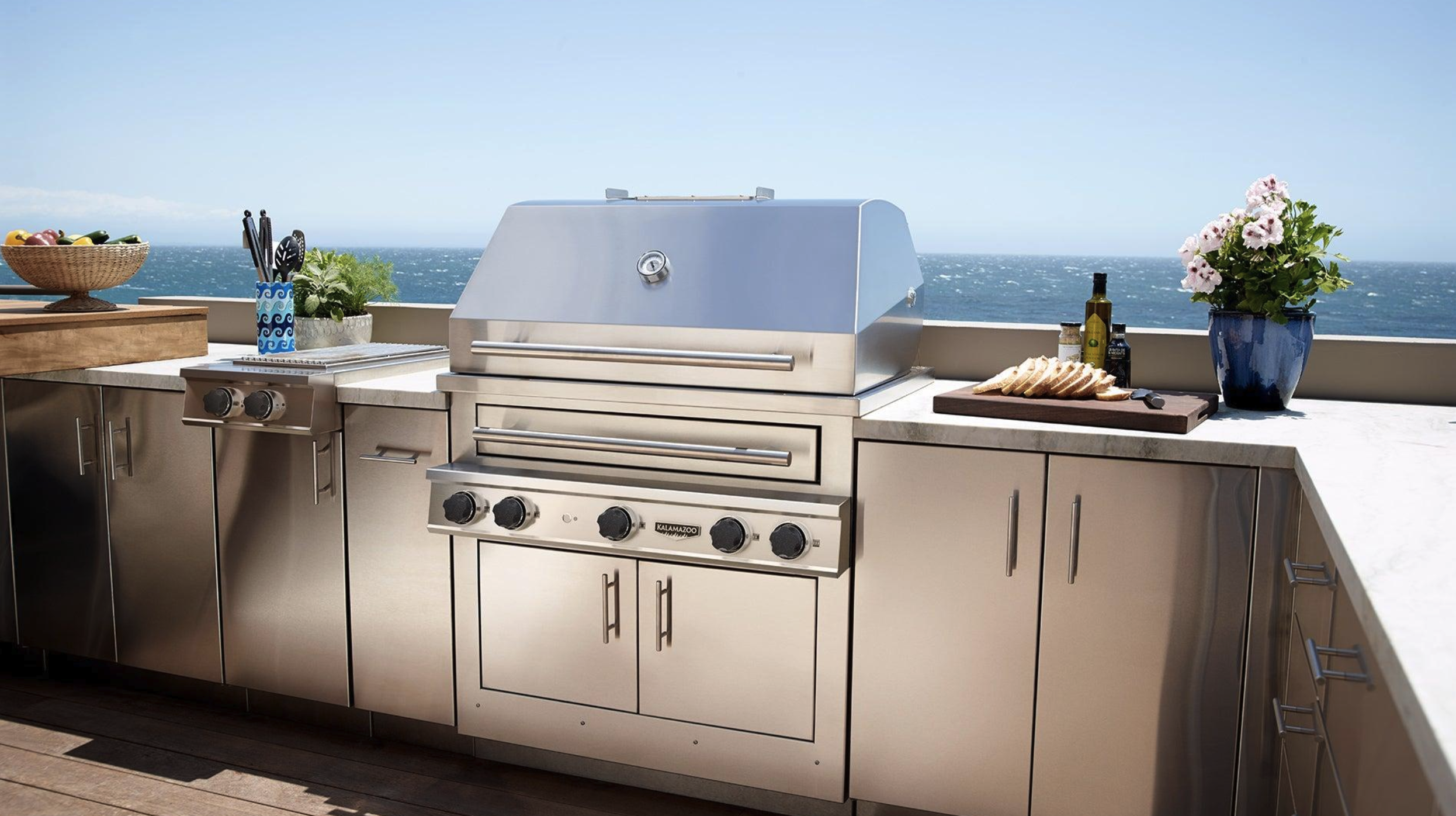
Buying a grill for a beach house? Learn why 304 vs. 316 stainless steel, quality components, and protective covers matter in coastal environments.
There's something special about grilling at a beach house. Ocean breezes, outdoor entertaining, and a perfectly cooked steak with a sunset view are hard to beat. But that beautiful coastal environment comes with a hidden cost: corrosion.
Salt-laden air, moisture, humidity, and wind-driven sea spray create some of the most demanding conditions an outdoor grill can encounter. A grill that performs beautifully for 15 years in a dry inland climate might show signs of deterioration much sooner when installed near the ocean.
And here's something many consumers don't realize:
Not all stainless steel is created equal.
Two grills might look nearly identical, carry premium price tags, and advertise stainless steel construction. Yet the materials beneath their polished exteriors can differ substantially. Understanding those differences can help you invest smarter, especially when buying a grill for a coastal home.
1. Stainless steel isn't rustproof. It's corrosion-resistant.
Stainless steel contains chromium, which reacts with oxygen to form a microscopically thin protective layer on the metal's surface. This passive layer helps protect the underlying steel against corrosion.
However, chloride ions from sea salt can damage that protective layer, particularly in areas where moisture and salt deposits accumulate.
Over time, this can lead to:
- Tea staining: Brownish discoloration on stainless steel surfaces.
- Pitting corrosion: Small, localized cavities that can penetrate the metal.
- Crevice corrosion: Corrosion around fasteners, joints, overlapping panels, and trapped moisture.
- Component deterioration: Corrosion affecting burners, brackets, screws, hinges, and other hardware.
Tea staining may be primarily cosmetic, while deep pitting or corrosion affecting load-bearing or gas-handling components can become a functional or safety concern.
The closer your grill is to breaking surf, and the more exposed it is to salt spray, the more important material selection becomes.
2. Understanding stainless steel grades: 304 vs. 316 vs. 430
316 stainless steel — the premium coastal choice: Often referred to as marine-grade stainless steel, 316 contains molybdenum, which improves resistance to chloride-induced pitting and crevice corrosion. For highly exposed coastal installations, it is generally the preferred choice. Important: Even 316 stainless steel is not immune to corrosion. It still requires cleaning and maintenance, especially in severe marine environments. Manufacturers, like Kalamazoo, offer grills in either 304 or 316 (marine grade).
304 stainless steel — an excellent general-purpose choice: Widely used in premium outdoor grills, 304 provides good corrosion resistance and durability. It can work well near the coast with appropriate maintenance and protection, although it is more vulnerable to chloride attack than 316.
430 stainless steel — better suited to less aggressive environments:A lower-cost ferritic stainless steel commonly found in appliances and some grill components. It generally offers less corrosion resistance than 304 or 316, making it a less desirable choice for exposed coastal applications.
3. Don't judge a grill by its stainless steel exterior
One of the most common mistakes consumers make is evaluating a grill based primarily on its hood, control panel, and exterior cabinet.
Those are the components manufacturers know you'll see first.
But a grill's long-term durability depends heavily on what's underneath.
A manufacturer may advertise a stainless steel grill while using different grades of stainless steel—or even other metals—for individual components.
Pay particular attention to the following:
Burners: These are among the most important components to evaluate. High-quality stainless steel burners should resist corrosion and thermal cycling. Some premium grills use cast stainless steel burners, while others use fabricated tubular designs. Material grade, wall thickness, design, and replaceability all matter.
Heat diffusers and flame tamers: These components are exposed to intense heat, grease, food acids, and moisture. They can deteriorate faster than the exterior shell. Ask what they're made of and whether replacements are readily available.
Cooking grates: Heavy stainless steel grates are often a good coastal choice because they're durable and relatively easy to maintain. Cast iron can perform exceptionally well for searing, but requires more diligent drying and seasoning to prevent rust.
Fasteners, hinges, and brackets: Small components can become major failure points. Corroded screws can seize, hinges can bind, and mounting brackets can weaken. Corrosion-resistant hardware is especially important in coastal installations.
Cabinets, carts, and frames: Don't assume that a stainless steel hood means the entire grill cart is stainless steel. Painted steel frames, low-grade fasteners, and poorly protected joints may corrode long before the cooking chamber fails.
Electrical components: Ignition systems, lighting, wiring connections, and control electronics also deserve attention. Salt and moisture can affect electrical contacts even when the surrounding metal remains in excellent condition.
When shopping, ask the manufacturer for a component-level materials breakdown rather than relying on a generic claim of stainless steel construction.
4. Construction quality matters as much as material grade
A grill made with excellent materials can still suffer premature corrosion if it's poorly constructed.
Look for smooth welds, properly finished seams, well-aligned panels, and designs that prevent water from accumulating inside enclosed spaces.
Rough welds, scratches, embedded iron contamination from fabrication, and tight crevices can create vulnerable areas where corrosion begins.
Good drainage and ventilation are especially important. Moisture trapped inside a cabinet can remain long after the exterior surfaces have dried.
In coastal settings, thoughtful design that allows components to dry and makes them accessible for cleaning can be a significant advantage.
Also consider the quality of the surface finish. Smooth, properly finished stainless steel surfaces are generally easier to clean and less likely to retain corrosive deposits than rough or damaged surfaces.
5. Your grill cover is not an accessory. It's part of your protection strategy.
Even marine-grade stainless steel benefits from protection against airborne salt, rain, dust, and environmental contaminants.
But not every grill cover is suitable for coastal conditions.
An inexpensive, poorly fitting cover may deteriorate quickly under intense sunlight, tear in strong winds, or trap moisture against the very surfaces it's supposed to protect.
What to look for in a coastal grill cover
- Heavy-duty, UV-resistant fabric: Choose a durable, outdoor-rated material designed to withstand prolonged sun exposure. Solution-dyed polyester or other high-performance outdoor fabrics can offer excellent UV resistance, depending on their construction and coating.
- Water resistance without excessive moisture trapping: The ideal cover keeps most rain and salt spray off the grill while allowing accumulated moisture to escape. A completely impermeable cover without ventilation can encourage condensation.
- Proper ventilation: Well-designed covered vents can improve airflow and reduce trapped humidity without leaving large openings for rain to enter.
- Reinforced seams and durable stitching: Look for strong, reinforced construction, especially at corners, handles, and high-stress areas. UV-resistant thread and quality seam construction are important for long-term outdoor durability.
- Secure straps or fastening systems: Coastal winds can be powerful. Adjustable straps, buckles, or other positive fastening systems help prevent the cover from lifting, flapping excessively, or blowing away.
- A tailored fit: A cover designed for your specific grill is generally preferable to an oversized universal cover. Excess fabric can collect water, rub against the finish, and become a sail in high winds.
A word of caution: Don't cover a wet, salty grill and forget about it.
A cover is not a substitute for cleaning. If salt deposits and moisture are already present, covering the grill for an extended period can create a humid microenvironment that encourages corrosion.
Allow the grill to cool completely, remove salt deposits as needed, and let the surfaces dry before fitting the cover.
Never place a cover on a hot grill.
6. Coastal grill maintenance: A little attention goes a long way
Even the best materials benefit from a regular maintenance routine.
Coastal grill care checklist
Wipe exterior stainless steel with fresh water and a soft cloth - Weekly or after heavy salt spray
Wash surfaces with mild soap, rinse, and dry - Every few weeks, as needed
Inspect hinges, fasteners, and exposed joints - Monthly
Check burner ports, flame tamers, and grates - Monthly or per manufacturer guidance
Clean and fully dry the cover - Periodically
Inspect the cart, cabinet, and electrical connections - Every 3–6 months
These intervals are practical starting points, not universal requirements. An oceanfront installation exposed to frequent salt spray may need cleaning after each significant exposure.
Avoid steel wool, ordinary carbon-steel brushes, chlorine bleach, and harsh cleaners that can damage stainless steel or contaminate its surface. Always follow the grill manufacturer's cleaning instructions, particularly for burners and electrical components.
If you discover deep pitting, perforation, compromised burner components, or corrosion affecting gas connections, stop using the grill until it has been inspected and repaired as appropriate.
7. What about warranties and replacement parts?
A manufacturer's warranty can provide valuable insight into its confidence in the product, but coastal buyers should read the fine print.
Some warranties exclude corrosion, surface discoloration, environmental damage, or installations exposed to salt air.
Before purchasing, investigate whether the warranty specifically covers corrosion-related failures, whether burners and internal components receive the same protection as the exterior housing, and whether replacement parts will remain available.
A grill with replaceable burners, accessible components, and dependable manufacturer support may prove a better long-term investment than a more expensive grill with limited serviceability.
8. Seven questions to ask before buying a coastal grill
Before committing to a purchase, ask the manufacturer or dealer:
1. What grade of stainless steel is used? Is it 304, 316, 430, or a combination?
2. Which components use which grades? Ask specifically about burners, cooking grates, heat diffusers, fasteners, and the cart.
3. Is the grill recommended for coastal installations? Does the manufacturer impose distance-from-ocean restrictions?
4. How is the stainless steel finished? Are welds and fabricated surfaces properly treated to preserve corrosion resistance?
5. What does the warranty exclude? Is salt-air corrosion covered?
6. Are replacement components readily available? What do replacement burners, grates, and ignition systems cost?
7. Is there a purpose-built, heavy-duty cover? Does it provide UV resistance, secure fastening, and moisture management?
If the manufacturer cannot answer basic questions about material grades, consider that a reason to investigate further.
9. The Find A Grill verdict: Buy for your environment, not just your cooking style
A coastal grill is an investment in outdoor living, and the least expensive option today may not offer the lowest cost of ownership over time.
For highly exposed oceanfront installations, prioritize 316 stainless steel construction where available, high-quality internal components, corrosion-resistant hardware, thoughtful drainage, and a durable, properly fitted cover.
For protected coastal patios, a well-constructed 304 stainless steel grill can also be a sensible choice, as long as you're willing to maintain it.
In exceptionally harsh environments with direct salt spray, even 316 may require frequent maintenance or additional corrosion protection.
Ultimately, the right grill isn't necessarily the one with the most burners, the highest BTU rating, or the shiniest exterior. It's the one engineered to withstand the environment where you'll actually use it.
And whether you're grilling overlooking the Pacific, Atlantic, or Gulf Coast, choosing the right materials today can help you enjoy more cookouts and fewer expensive repairs tomorrow.
Explore and compare grills from manufacturers around the world at Find A Grill.
Technical References/Resources:
International Molybdenum Association — Stainless Steel FAQ. Explains the corrosion-resistance advantage of 316 over 304.
British Stainless Steel Association — Stainless Steel in Seawater Applications. Covers pitting, crevice corrosion, and limitations of marine-grade steel.
British Stainless Steel Association — Care and Maintenance. Provides cleaning guidance for stainless steel in marine environments.